


Le Test d'étanchéité par immersion dans l'eau est une procédure critique utilisée pour évaluer l'intégrité des conteneurs rigides, en particulier ceux destinés au transport de liquides dangereux. Ce test est réalisé conformément à ASTM D4991 et constitue une méthode efficace pour s'assurer que les conteneurs ne fuient pas dans des conditions de pression différentielle, telles que celles rencontrées lors du transport aérien. Dans cet article, nous examinerons la signification du test, la méthodologie et son importance pour le maintien de la sécurité et de la qualité des emballages.
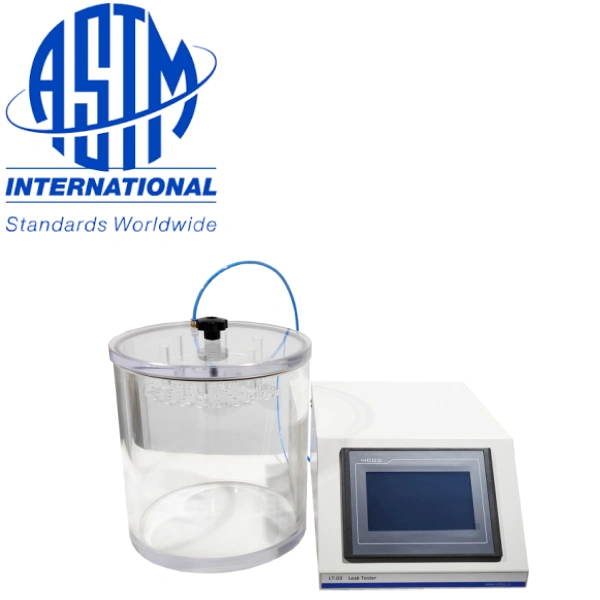
L'importance des tests d'intégrité des conteneurs rigides
Les conteneurs rigides sont essentiels pour le conditionnement des substances dangereuses, et leur intégrité pendant le transport est primordiale. Test d'intégrité des conteneurs rigides garantit que les conteneurs, y compris leurs fermetures, sont résistants aux fuites, même dans des conditions de pression. Cette méthode d'essai est particulièrement importante pour les conteneurs qui transportent des marchandises dangereuses par voie aérienne, conformément à la directive sur le transport des marchandises dangereuses. Recommandations des Nations unies sur le transport des marchandises dangereuses et Instructions techniques de l'OACI.
Le processus du test d'étanchéité par immersion dans l'eau
Le Test d'étanchéité par immersion dans l'eau consiste à immerger le conteneur dans une solution d'éthylène glycol et d'eau à l'intérieur d'une chambre transparente. Le processus commence par l'application d'un vide, qui simule les conditions auxquelles le conteneur sera confronté pendant le transport. Voici un aperçu de la procédure de test :
- Préparation des échantillons d'essai
Les récipients d'essai, ainsi que leurs fermetures, sont choisis au hasard, de manière à ce qu'ils soient représentatifs du lot de production. Les conteneurs sont d'abord vidés et nettoyés avant d'être testés. - Application sous vide
Le récipient est immergé dans la chambre d'essai et un vide est appliqué à la chambre. La pression différentielle atteint environ 95 kPa (13,8 psi) et est maintenu pendant 10 minutes pour simuler les conditions réelles. - Surveillance des fuites
Pendant l'application du vide, le récipient est observé pour détecter tout signe de fuite. Les fuites sont indiquées par la formation de bulles à la surface du récipient ou par la présence de liquide à l'intérieur du récipient après le relâchement du vide. - Interprétation des résultats
Si une fuite est détectée, sous forme de bulles ou de liquide à l'intérieur du conteneur, l'essai est considéré comme raté. Si aucune fuite n'est observée, le conteneur passe l'épreuve et est considéré comme apte au transport.
ASTM D4991 et son rôle dans le processus de test d'étanchéité
ASTM D4991 est la méthode d'essai normalisée pour les Test d'étanchéité des conteneurs rigides vides par la méthode du vide. Elle établit les lignes directrices pour tester les conteneurs sous pression différentielle, en particulier pour les conteneurs destinés à contenir des liquides dangereux pendant le transport aérien.
- Détection des fuites: La norme indique comment détecter les fuites en surveillant les bulles pendant le processus de mise sous vide.
- Applicabilité: L'ASTM D4991 s'applique aux conteneurs rigides, y compris ceux utilisés pour les matières dangereuses, et garantit qu'ils répondent aux normes de résistance aux fuites nécessaires.
Méthode d'essai d'étanchéité à la bulle pour détecter les fuites
L'une des méthodes les plus efficaces utilisées dans les essais d'étanchéité par immersion dans l'eau est le méthode d'essai d'étanchéité à la bulle. Lorsque le vide est appliqué, l'air emprisonné à l'intérieur du conteneur crée des bulles visibles, ce qui indique une fuite. Un flux continu de bulles ou une succession récurrente de bulles confirme la fuite.
Cette méthode constitue un moyen efficace et visuel de déterminer l'intégrité du conteneur et de s'assurer qu'il peut résister aux variations de pression pendant le transport.
Test d'intégrité du vide et son importance
A test d'intégrité du vide est un élément essentiel de la Test d'étanchéité par immersion dans l'eau. En simulant une condition de vide, le test examine la capacité d'un conteneur rigide à résister aux fuites d'air ou de liquide sous l'effet des variations de pression. Le test d'intégrité du vide est particulièrement important pour les conteneurs qui sont soumis à diverses pressions environnementales pendant le transport et le stockage.
Le rôle des testeurs de fuites dans l'assurance qualité
Au Instruments cellulaires, Nous offrons des services avancés de Testeurs de fuites conçus pour mesurer avec précision les performances des conteneurs rigides lors des tests de résistance à l'étanchéité. Nos instruments de test d'étanchéité sont dotés d'une grande précision et respectent les normes industrielles telles que ASTM D4991 et ISO 11140-4, Ces instruments permettent aux fabricants de s'assurer que leurs conteneurs sont aptes à transporter des liquides dangereux en toute sécurité. Ces instruments aident les fabricants à s'assurer que leurs conteneurs sont adaptés au transport en toute sécurité de liquides dangereux.
Conclusion
Le Test d'étanchéité par immersion dans l'eau est une procédure essentielle pour garantir l'intégrité des conteneurs rigides utilisés pour le transport de matières dangereuses. En suivant les lignes directrices énoncées dans ASTM D4991, Grâce à cette méthode, les fabricants peuvent s'assurer que leurs conteneurs ne fuiront pas sous la pression, ce qui minimise les risques de fuite pendant le transport. Des méthodes d'essai telles que le méthode d'essai d'étanchéité à la bulle et tests d'intégrité du vide jouent un rôle crucial dans l'assurance qualité et contribuent à maintenir la sécurité des conteneurs pendant le transport aérien.
Pour plus d'informations sur Testeurs de fuites ou pour se renseigner sur Instruments cellulaires’ des solutions pour Test d'intégrité des conteneurs rigides, Veuillez nous contacter. Nos produits offrent la précision et la fiabilité nécessaires à la réalisation de tests d'étanchéité et de contrôles de qualité complets.
 EN_GB
EN_GB  BG
BG  CS
CS  DA
DA  EL
EL  ET
ET  FI
FI  HU
HU  IT
IT  LT
LT  LV
LV  NB
NB  NL
NL  PL
PL  PT
PT  RO
RO  SK
SK  SL
SL  SV
SV  TR
TR  UK
UK  EN
EN  VI
VI  TH
TH  AZ
AZ  BE
BE  BN
BN  BS
BS  CA
CA  FA
FA  HE
HE  HI
HI  HR
HR  HY
HY  JV
JV  KK
KK  SQ
SQ  SR
SR  AF
AF  CY
CY  AS
AS  CEB
CEB  DZ
DZ  EU
EU  KA
KA  SI
SI  TL
TL  SW
SW  PS
PS