


ASTM F1140: A Comprehensive Guide to Packaging Burst Tests
When it comes to ensuring the integrity of packaging, especially for medical, pharmaceutical, and food products, testing is an essential part of the process. The ASTM F1140 standard provides guidelines for testing the internal pressurization failure resistance of unrestrained packages. This standard includes various test methods that help manufacturers assess the ability of packaging materials to withstand pressure without failing. In particular, the iepakojuma pārraušanas tests plays a crucial role in simulating real-world conditions that packages will face during transportation, sterilization, and storage.
Understanding and applying ASTM F1140 is key to ensuring packaging quality, safety, and performance across different industries.
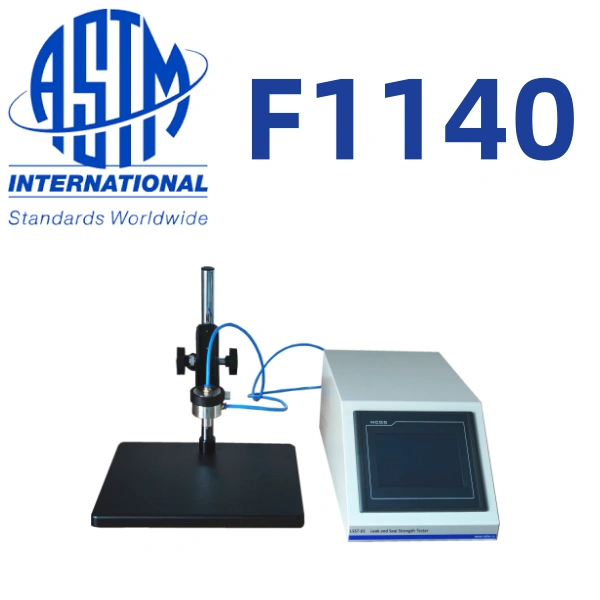
Packaging Burst Test: Core Method for Leak Detection
Overview of Packaging Burst Test
Packaging burst test is one of the critical methods under ASTM F1140 to measure how well a package can withstand internal pressurization before failure occurs. This test is designed to simulate conditions that a package may face during handling, including pressure differentials caused by environmental changes or during transportation.
The test method involves pressurizing the package internally until it bursts, and the maximum pressure at the point of failure is recorded. This test is performed using specialized equipment designed to maintain increasing pressure until the package fails, ensuring that manufacturers can assess the pressure resistance of their packaging materials.
The Role of Seal Strength Test in Burst Testing
While the burst test measures a package’s maximum pressure resistance, the seal strength test evaluates the effectiveness of the seals that keep the package intact. For many packaging types, particularly those in the medical and food industries, the seal is one of the most critical components. A weak seal can lead to leaks, contamination, or even complete failure of the packaging.
The seal strength test is often conducted alongside the burst test to verify the overall reliability of the package. This combined testing approach helps manufacturers address both the material strength and seal integrity, offering a comprehensive evaluation of packaging performance.
Creep Test: Another Essential Method for Package Evaluation
The slīdēšanas tests, another method outlined in ASTM F1140, measures a package’s ability to withstand internal pressure over an extended period. Unlike the burst test, which focuses on the maximum pressure resistance at the point of failure, the creep test holds the package at a specific pressure for a defined time.
In some cases, the package may fail during this test, allowing manufacturers to assess how well the packaging can endure pressure without experiencing deformation or failure. The creep test to failure method is a more rigorous version where the package is held under pressure until it fails, providing additional insights into the package’s performance.
Leak and Seal Strength Tester: Supporting ASTM F1140 Compliance
For manufacturers and quality control professionals, ensuring compliance with ASTM F1140 requires precise testing equipment. Cell Instruments’ Leak and Seal Strength Tester is designed to help manufacturers quickly and accurately assess the seal strength, burst pressure, and other critical aspects of packaging.
These testers provide the precision necessary to test packaging in various configurations, from flexible and rigid containers to vacuum-packed bags. They help manufacturers identify weaknesses in the sealing process, improve material selection, and optimize packaging designs to meet regulatory and performance standards.
Vacuum Pack Bags Seal Test
When testing vacuum pack bags, the focus is on ensuring that the seals are strong enough to maintain the integrity of the vacuum during transportation and storage. Vacuum packs are commonly used in the food and pharmaceutical industries, where maintaining the sterile or fresh condition of products is crucial. The seal strength test in conjunction with burst and creep testing ensures that vacuum packs can withstand the internal pressure changes that occur during handling and shipping.
Why ASTM F1140 Is Essential for Packaging Testing
Significance and Use
ASTM F1140 provides manufacturers with a structured approach to evaluate the performance of packaging materials under pressure. The standard helps companies quickly identify potential failures in packaging design, making it an essential tool in both the development and manufacturing phases.
Pressure differentials are common in sterilization, transportation, and storage, so understanding how packages react to these changes is vital. By applying ASTM F1140’s burst and creep test methods, manufacturers can optimize their packaging to ensure product safety, reduce wastage, and comply with industry regulations.
Leverage Accurate Testing with Cell Instruments
With accurate testing methods outlined in ASTM F1140, manufacturers in industries such as pharmaceuticals, food, and medical devices can confidently ensure the quality and integrity of their packaging. The Šūnu instrumenti Noplūdes un blīvējuma stiprības testeris plays a pivotal role in meeting these standards, offering reliable and efficient solutions for leak detection and seal strength testing.
By investing in the right testing equipment and following ASTM F1140, manufacturers can improve packaging durability, minimize defects, and ultimately enhance product safety for consumers.
 EN_GB
EN_GB  BG
BG  CS
CS  DA
DA  EL
EL  ET
ET  FI
FI  HU
HU  IT
IT  LT
LT  NB
NB  NL
NL  PL
PL  PT
PT  RO
RO  SK
SK  SL
SL  SV
SV  TR
TR  UK
UK