ASTM D5094 is an important international standard that provides methods to evaluate the gross leakage of liquids from containers with threaded or lug-style closures. It is especially relevant for rigid and semi-rigid containers up to 4 liters. By following ASTM D5094, manufacturers and quality control professionals can ensure that bottles used for beverages, pharmaceuticals, chemicals, and other liquid products maintain closure integrity throughout storage and transportation.
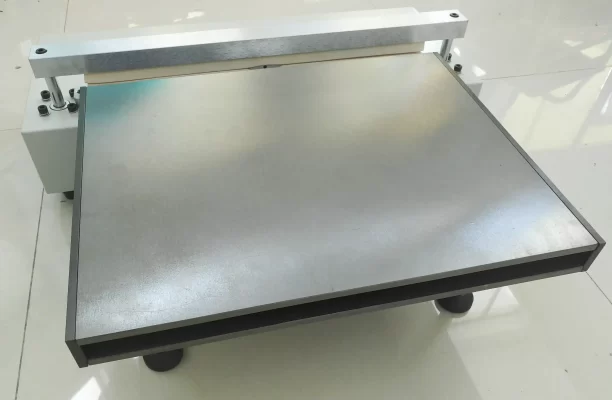
විවෘත ඇසුරුම සඳහා තහඩු සීමා කිරීම
ASTM D5094 Description
ASTM D5094 focuses on two main test methods—one involving vibration and storage conditions, and the other combining vibration with රික්ත කාන්දු පරීක්ෂණය. Both methods provide insights into how well a container and its closure system can withstand stresses during distribution without leaking.
Bottle Leak Test Procedure Based on ASTM D5094
When customers search for bottle leak test procedure, bottle leak testing, leak test procedure for liquid bottles, bottle leak testing machine, හෝ vacuum leak test for bottles, they are often looking for structured guidance that complies with recognized standards. ASTM D5094 addresses this need with two specific procedures:
Method A: Shipping Container Vibration and Storage Test
Fill and Seal – Containers are filled to capacity with the intended liquid or a product-simulating fluid. Closures are applied using production-level torque.
Vibration – Bottles are packed into shipping cartons and subjected to vibration (ASTM D999 or equivalent shipping cycles).
High-Temperature Storage – Specimens are placed on their sides at 40 °C (104 °F) for up to four weeks. Absorbent material can be used to detect leaks.
Inspection – At scheduled intervals (24 h, one week, four weeks), containers are checked for leakage, crusting, or thread seepage.
This method is more severe and simulates real-world transportation and storage conditions.
Method B: Container Vibration and Vacuum Chamber Test
Partial Filling – Containers are partially filled and sealed with proper torque.
Vibration – Specimens are subjected to vibration in cartons.
Vacuum Test – After vibration, individual bottles are inverted in a vacuum chamber and exposed to –34 kPa (10 in. Hg) for 10 minutes.
පරීක්ෂාව – Containers are inspected for bubbles, cracks, or visible leakage.
This method is faster and suitable for individual container evaluation, making it widely adopted in routine vacuum leak test for bottles.
Significance of Bottle Leak Testing in Industry
ASTM D5094 is not just a laboratory exercise—it has direct relevance to manufacturing and distribution:
Quality Assurance
Ensures that bottle closures maintain integrity even under stress.
Safety Compliance
Prevents contamination, product loss, and regulatory non-compliance.
Brand Protection
Reduces risks of leaking bottles reaching customers.
පිරිවැය ඉතිරිකිරීම්
Identifies weak closure designs before mass production.
For industries like food, pharmaceuticals, beverages, and chemicals, leakage prevention is critical to maintaining consumer trust and avoiding costly recalls.
Choosing a Bottle Leak Testing Machine
To apply ASTM D5094 effectively, companies rely on reliable bottle leak testing machines. A vacuum leak test for bottles is particularly useful because it provides a quick and visual confirmation of closure integrity through bubble emission.
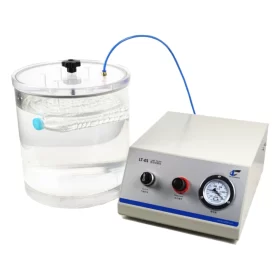
LT-01 කාන්දු පරීක්ෂකය
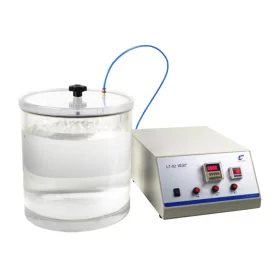
LT-02 කාන්දු පරීක්ෂකය
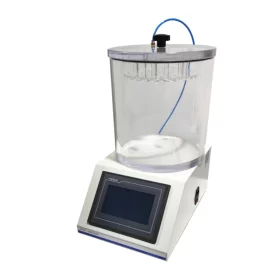
LT-03 කාන්දු පරීක්ෂකය
Cell Instruments offers advanced leak testers, such as the LT Series Leak Testers, which feature:
Transparent, durable vacuum chambers for visual detection.
Adjustable vacuum levels up to –90 kPa for stronger stress testing.
Options for manual, semi-automatic, and fully automatic testing.
Customizable chamber sizes to fit different bottle types.
These systems align with ASTM standards and give manufacturers confidence that their containers meet strict quality demands.
Interpretation of Results under ASTM D5094
සමත් වන්න
No visible leakage outside the container.
අසමත්
Any liquid escapes beyond the closure.
Conditional
Leakage limited to threads but not outside; may require comparative evaluation.
ASTM D5094 is a standard that defines test methods for detecting gross leaks in containers with threaded or lug-style closures. It helps manufacturers verify that bottles can withstand vibration, storage, and vacuum conditions without leakage, ensuring product safety and quality.
Two procedures are defined: Method A (vibration plus high-temperature storage) and Method B (vibration plus vacuum leak testing). Method A is more severe and simulates long-term storage, while Method B provides faster results with a controlled vacuum leak test for bottles.
A bottle leak testing machine with a transparent vacuum chamber is ideal. Cell Instruments’ LT Series Leak Testers, for example, allow visual detection of leaks through bubble emission and can be customized for different bottle sizes and test conditions.
Conditional: Leakage only in threads, requiring further evaluation. This simple pass/fail approach makes it easy to determine if packaging meets integrity requirements.
The standard applies to rigid and semi-rigid bottles up to 4 liters with threaded or lug-style closures. It is widely used for beverages, pharmaceuticals, chemicals, and consumer goods, but may not be suitable for containers transporting hazardous materials.
ASTM D5094 is a standard that defines test methods for detecting gross leaks in containers with threaded or lug-style closures. It helps manufacturers verify that bottles can withstand vibration, storage, and vacuum conditions without leakage, ensuring product safety and quality.
Two procedures are defined: Method A (vibration plus high-temperature storage) and Method B (vibration plus vacuum leak testing). Method A is more severe and simulates long-term storage, while Method B provides faster results with a controlled vacuum leak test for bottles.
A bottle leak testing machine with a transparent vacuum chamber is ideal. Cell Instruments’ LT Series Leak Testers, for example, allow visual detection of leaks through bubble emission and can be customized for different bottle sizes and test conditions.
Conditional: Leakage only in threads, requiring further evaluation. This simple pass/fail approach makes it easy to determine if packaging meets integrity requirements.
The standard applies to rigid and semi-rigid bottles up to 4 liters with threaded or lug-style closures. It is widely used for beverages, pharmaceuticals, chemicals, and consumer goods, but may not be suitable for containers transporting hazardous materials.
Looking for reliable ASTM D5094 leak detection equipment?




 EN_GB
EN_GB  BG
BG  CS
CS  DA
DA  EL
EL  ET
ET  FI
FI  HU
HU  IT
IT  LT
LT  LV
LV  NB
NB  NL
NL  PL
PL  PT
PT  RO
RO  SK
SK  SL
SL  SV
SV  TR
TR  UK
UK  EN
EN  VI
VI  TH
TH  AZ
AZ  BE
BE  BN
BN  BS
BS  CA
CA  FA
FA  HE
HE  HI
HI  HR
HR  HY
HY  JV
JV  KK
KK  SQ
SQ  SR
SR  AF
AF  CY
CY  AS
AS  CEB
CEB  DZ
DZ  EU
EU  KA
KA  TL
TL  SW
SW  PS
PS