

ISO 8537

Sterile single-use syringes, with or without needle, for insulin

ISO 8537 Introduction

In the medical field, syringes for insulin delivery demand the highest level of reliability and safety. The ISO 8537 standard—Sterile single-use syringes, with or without needle, for insulin—outlines essential methods to test the performance of these devices. Ensuring that each syringe passes rigorous assessments for rilevamento delle perdite, sealing performance, e functionality is critical to patient safety.

ISO 8537 Overview and Significance

ISO 8537 defines specifications and test methods for single-use insulin syringes to confirm their usability, mechanical integrity, and fluid-tight sealing under expected operating conditions. The standard focuses on critical components such as the piston seal, nozzle/hub connection, and the interaction between the plunger and rubber stopper.

Syringes that fail to meet ISO 8537 criteria may pose risks such as improper dosage, contamination, or fluid leakage—making these tests vital for quality assurance and regulatory compliance.

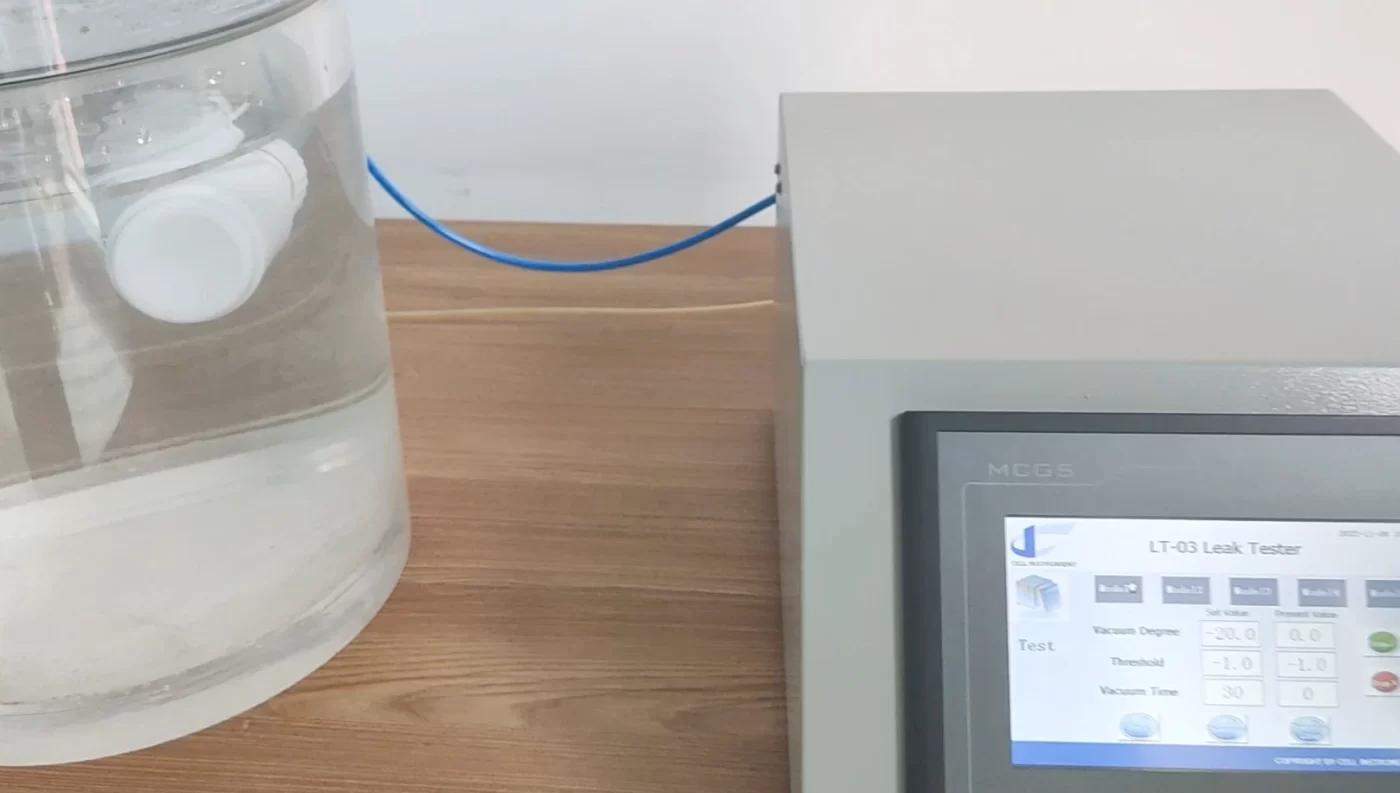
Bottle Vacuum Leak Test

Syringe Leak Detection and Sealing Performance Testing

Leak detection and sealing evaluations are among the most crucial components of syringe performance testing. ISO 8537 outlines procedures in Annex B, Annex E, e Annex F to ensure syringes maintain integrity under aspiration and compression.

To assess air leakage past the piston (Annex B) or nozzle-hub connections (Annex F) during aspiration:

  • The syringe is filled with distilled water (≥25% of nominal capacity).
  • Il plunger is withdrawn to the full graduated capacity and fixed in place.
  • A vacuum of 88 kPa below ambient pressure is applied.
  • Observations are made for air bubbles or pressure drops over 60 seconds.

Continued bubble formation after the first few seconds indicates leakage through syringe connections or seals. This test is essential for detecting micro-leaks that may otherwise go unnoticed but could compromise sterility and dosage accuracy.

Il test di tenuta dei liquidi verifies sealing effectiveness during plunger compression:

  • The syringe is filled beyond maximum capacity e sealed at the nozzle or needle tip.
  • A side load of 0.25 N is applied to simulate real-use misalignment.
  • The syringe is then compressed to generate 300 kPa internal pressure for 30 seconds.
  • Technicians inspect for piston movement and fluid leakage around critical junctions.

This test simulates real-world pressure variations and mechanical stress that could affect the syringe sealing performance during injections.

Apparecchiature di test

Il SLT-02 is designed for high-precision vacuum leak testing of syringes. It features:

  • Stable vacuum generation via venturi tube
  • Adjustable fixtures for multiple syringe sizes
  • Automatic testing cycle for efficiency
  • Ideal for both air leakage e stopper retention testing

This instrument is essential for meeting ISO 8537 Annex B and F testing requirements with accuracy and repeatability.

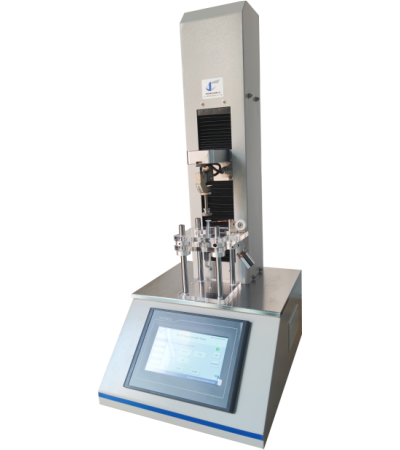
Il SPPT-01 simulates ISO 8537 Annex E conditions using:

  • Controlled plunger compression with side force deflection
  • Precision ball screw mechanics for smooth motion
  • Touchscreen operation and overload protection
  • Supports customizable force settings and test speeds

The SPPT-01 ensures accurate testing of sealing performance under pressure, verifying dosage safety.

Cell Instruments: Your Partner in Syringe Leak Testing

To fully align with ISO 8537

Cell Instruments provides a full range of ISO 8537-compliant test equipment for the pharmaceutical and medical industries. Our solutions offer:

  • Precision control of pressure and movement
  • Customizable fixtures for various syringe designs
  • Automation-ready systems to enhance lab efficiency

With our SPPT-01, SLT-02 tester, your team can confidently execute ISO 8537 tests and deliver reliable, high-performance syringes to market.

FAQ about ISO 8537

1. What types of leakage does ISO 8537 address in syringe testing?

ISO 8537 evaluates both air leakage during aspiration and liquid leakage under compression, especially at the piston and nozzle/hub connections.

A vacuum is applied to a partially filled syringe, and the tester observes for air bubbles and pressure drops, using devices like SLT-02 Syringe Leak Tester.

It ensures that syringes don’t leak during injection, maintaining dosage accuracy and patient safety, verified with tools like SPPT-01.

Functionality is evaluated by measuring the force needed to move the plunger and by checking if the stopper remains attached, using the SSR-01 Sliding Resistance Tester.

Yes, Cell Instruments offers PLC-controlled testers with touchscreens, automatic test cycles, and customizable features for efficient syringe QC processes.

Looking for reliable ISO 8537 syringe leak detection equipment?

 Non perdete l'occasione di ottimizzare i vostri processi di controllo qualità con attrezzature all'avanguardia.

Informazioni correlate

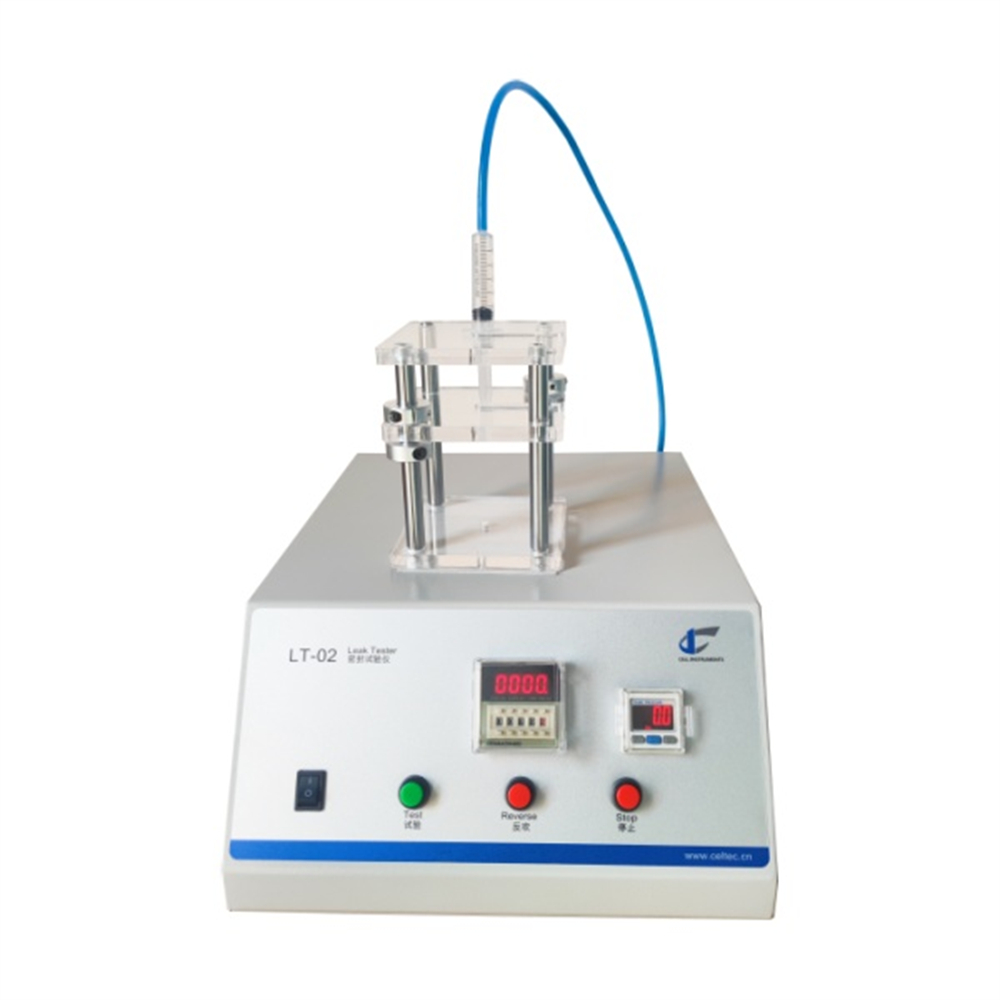
LT-02 Tester di tenuta

Il LT-02 Tester di tenuta è una soluzione automatica ad alte prestazioni per il test del vuoto, progettata specificamente per rilevare le perdite negli imballaggi flessibili, in particolare nelle applicazioni in cui è presente gas nello spazio di testa. Questa apparecchiatura è comunemente utilizzata nei settori alimentare, delle bevande, farmaceutico e in altri settori in cui l'affidabilità dell'imballaggio è fondamentale per mantenere la qualità del prodotto.

Per saperne di piĂą

LT-03 Tester di tenuta

Il tester di tenuta LT-03 è un dispositivo all'avanguardia progettato per una valutazione rigorosa dell'integrità della tenuta delle confezioni in diversi settori industriali. Questa apparecchiatura è fondamentale per verificare che l'imballaggio mantenga le sue capacità protettive, salvaguardando così la qualità e la sicurezza del prodotto. L'LT-03 è particolarmente adatto per le applicazioni che coinvolgono gli imballaggi flessibili, ma è anche adattabile per testare materiali non flessibili e rigidi grazie al suo design personalizzabile.

Per saperne di piĂą